
BARIATRIC SURGERY
Gastric Sleeve
Gastric sleeve in Istanbul — laparoscopic sleeve gastrectomy for significant weight loss when other approaches have not worked. All-inclusive with 12-month aftercare pathway: nutrition, psychology, blood work, follow-up in English. Medical oversight Dr. Güleş, JCI-accredited hospitals. All-inclusive package from €3,450.
from €3,350 All-inclusive
Trusted by 10,000+ international patients
JCIAccredited Hospitals
T.C.Ministry of Health Licensed
ISAPSBoard-Certified Surgeons
4.9 ★Trustpilot · 1,200+ reviews
15+ yrsYears of Experience
8,000+Procedures Performed
Get Your Free Consultation
Our medical team will review your case and send you a personalized treatment plan within 24 hours.
Global Price Comparison
Save up to 82% in Istanbul
Typical all-inclusive prices by country. Sources: ASPS, RealSelf, major UK/US clinic rate sheets, 2025.
🇹🇷
Turkey (Istanbul)
from €3,350
save 82%
🇬🇧
United Kingdom
from €15,000
🇺🇸
United States
from €18,500
🇮🇹
Italy
from €10,000
🇩🇪
Germany
from €10,000
Duration
1–2 hours
Anesthesia
General anesthesia
Hospital Stay
3 nights
Back to Work
2 weeks
Recovery Time
3–4 weeks
Results Visible
12–18 months
Gastric sleeve — laparoscopic sleeve gastrectomy — is the most performed bariatric operation worldwide and typically the one we recommend for patients meeting bariatric criteria who have not responded to non-surgical approaches. The surgeon removes approximately 75–80% of the stomach, leaving a tubular (sleeve-shaped) remnant of roughly 150 ml capacity. Food intake reduces substantially; hormonal changes (reduced ghrelin production from the resected portion) reduce hunger; weight loss over twelve to eighteen months is typically 60–70% of excess body weight.
Before we describe the operation, we need to be honest about what a serious bariatric program looks like — and why the UK, US and Australian press have been right to warn about low-cost bariatric tourism that lacks it. A gastric sleeve is not the operation itself; it is the operation plus twelve to eighteen months of nutritional support, psychological monitoring, and medical follow-up. A clinic that performs the surgery without this programme leaves patients stranded on their return home, and that is where the complications, the regain, and the tragedies reported in the press have originated.
Who gastric sleeve is suitable for
Bariatric surgery is appropriate for patients meeting specific medical criteria, not for general weight management. The right candidate typically has BMI over 35 with significant obesity-related comorbidities (type 2 diabetes, hypertension, sleep apnoea, significant joint disease), or BMI over 40 without comorbidities; has completed at least twelve months of documented non-surgical weight-loss attempts (diet, exercise, often GLP-1 medications) without achieving the required outcome; is between eighteen and approximately sixty-five years old (operating outside this range is case-by-case); has no active medical contraindications (unstable cardiovascular disease, significant liver dysfunction, active oncology, active substance abuse); is psychologically prepared — this is the most underestimated criterion — for a permanent change in eating patterns, and is willing to commit to nutritional supplements and follow-up for life; and is a non-smoker or has stopped smoking at least four weeks before surgery.
The GLP-1 context
Over the last two to three years we have seen a significant and growing cohort of patients who have lost substantial weight on semaglutide or tirzepatide (Ozempic, Wegovy, Mounjaro) and have then either plateaued, regained after stopping, or encountered cost/access problems with ongoing medication. For many of these patients the sleeve is the next logical step — a structural change to anatomy that does not require monthly injections to maintain.
At consultation we assess this honestly: some patients on GLP-1 are better served by continuing medication (sleeve is not always the answer); some are genuinely candidates for the surgical step. We discuss the decision with the nuance it requires.
The surgery, step by step
Performed under general anaesthesia in a JCI-accredited hospital with a bariatric-specialised anaesthesia team. Duration is one to one and a half hours. Two overnight stays in hospital are standard.
The operation is performed laparoscopically — four to five small incisions (5–12 mm) in the upper abdomen, through which the surgeon and team visualise the stomach and carry out the resection. The stomach is separated along its length using staple lines; the excess portion is removed; the remnant is tested for leaks and closed. No external open incision is made.
The aftercare programme — our differentiator
This is what separates a serious bariatric programme from bariatric tourism. For every gastric sleeve patient we include:
Pre-operative: comprehensive blood work (including vitamins, minerals, thyroid, liver function), nutritional assessment, psychological screening, and a minimum of two weeks on a pre-operative liver-shrinking diet delivered in English with specific meal plans.
In-hospital: minimum two overnight stays with continuous monitoring, leak test before discharge, pain management protocol, and discharge only when clinically stable.
Immediate post-operative: structured diet progression (clear liquids → full liquids → pureed → soft → solid) with specific timelines; nutritional supplements (protein, multivitamin, B12, iron, vitamin D, calcium) provided at discharge and instructions for ongoing supplementation; anti-reflux medication for a minimum of three months.
Long-term follow-up: blood work at 3, 6 and 12 months coordinated with your GP in the UK/IE/US/CA/AU/NZ; English-speaking nutritionist available via WhatsApp for twelve months post-operatively for meal planning, symptom management and troubleshooting; psychological support available on request; 24-month check-in for weight-regain risk assessment.
This programme is included in the package price. It is not an add-on and it is not optional.
Recovery
Week 1
Two overnight stays in hospital, followed by hotel recovery. Clear liquids only for the first seven days — small frequent sips, building to approximately 1.5 litres per day. Mild to moderate abdominal discomfort controlled with prescribed analgesics. Walking from day one — walking reduces thrombosis risk and is mandatory. Return flight is scheduled for day seven to ten, coordinated with clinical discharge.
Weeks 2–4
Progression to full liquids, then pureed foods, then soft foods, according to specific protocol. Portion sizes very small (3–4 tablespoons per meal, 6 meals per day). Continued protein supplementation. Return to desk work realistic from week two to three. No heavy lifting for six weeks.
Months 2–6
Progression to solid foods. Weight loss most rapid in this phase (typically 10–15 kg/month initially, tapering). Continued nutritional supplementation. Regular blood work at 3 and 6 months.
Months 6–18
Weight loss continues more gradually. By month 12–18 most patients have lost 60–70% of their excess body weight. Nutritional follow-up continues. Consideration of post-bariatric body contouring surgery typically starts at 12–18 months, when weight is stable.
Risks and realistic expectations
Honest risks: staple-line leak (the most serious early complication — we test for leaks before discharge and the serious cases present within days, not weeks); bleeding requiring re-operation; venous thromboembolism (why we insist on early mobilisation); reflux/GERD (may develop or worsen post-sleeve — a subset of patients ultimately require conversion to gastric bypass); nutritional deficiencies long-term if supplementation is not maintained (which is why our programme includes structured follow-up); weight regain at 3–10 years if eating patterns revert to pre-operative norms.
We are honest about regain risk. The sleeve is not a forever solution independent of behaviour — it is a structural change that enables behavioural change, and the 20% of patients who regain significantly at 5+ years are those who have not engaged with the behavioural dimension. The aftercare programme is designed to reduce this risk.
Gastric sleeve vs gastric bypass vs gastric balloon — the honest decision tree
Gastric sleeve: our most frequent recommendation for patients meeting bariatric criteria with BMI 35–50. Permanent structural change, 60–70% excess weight loss, preserves anatomy more than bypass.
Gastric bypass: typically for BMI over 50, for patients with significant reflux, or when sleeve has failed. More complex operation with higher long-term nutritional monitoring requirements but better long-term weight-loss outcomes in the highest-BMI range.
Gastric balloon: temporary (six or twelve months), non-surgical, BMI 27–35 range, typically as a bridge to behavioural change. Not a substitute for sleeve or bypass in bariatric-eligible patients.
At consultation we assess your BMI, comorbidities, reflux history and lifestyle context and recommend the operation that matches. We do not sell sleeve to every caller — the right operation is the one that matches the patient.
Why Istanbul versus other destinations
Turkey's bariatric volume is one of the highest in the world, which produces two things: surgical cumulative experience that is hard to match, and cost efficiency that other healthcare systems cannot replicate. Combined with proper JCI-accredited hospitals and a serious aftercare programme, the clinical and safety outcomes are equivalent to UK/US private practice at a fraction of the cost.
**Dr. Mustafa Ekrem Güleş** approves every patient clinically before surgery. Our bariatric team has performed thousands of sleeve gastrectomies and the volume of experience shows.
Why not the €2,000 gastric sleeve
On gastric sleeve, the rock-bottom price is paid in the three-day turnaround "drive-thru bariatric" model that the UK/US press has rightly criticised. A clinic quoting sleeve at €2,000 often performs the operation without comprehensive pre-operative work-up, discharges patients at 48 hours (before a leak can realistically be detected), provides no aftercare programme, and has no path for the complications that inevitably arise in a subset of patients.
What you pay for with us is verifiable: comprehensive pre-operative assessment (blood work, psychology, nutrition), two minimum overnight hospital stays, leak test before discharge, structured 12-month aftercare programme with English-speaking nutritionist, JCI-accredited hospital, follow-up at 1, 3, 6, 12 months with blood work coordinated with your GP.
Our commitment — and our honesty
We will not operate on patients who do not meet bariatric criteria. We will not operate on patients whose psychological or medical status makes surgery contraindicated. We will not operate on smokers who refuse to stop. The standards exist for safety reasons. Respecting them is what separates a serious programme from a numbers operation.
English-speaking team — from first message to 24-month check-in
Our team replies in English on WhatsApp, phone and email. For gastric sleeve specifically, you have additional contacts: an English-speaking nutritionist for 12 months post-operatively for meal planning and symptom troubleshooting, and an English-speaking coordinator for follow-up blood work and GP liaison. Bariatric recovery has many questions at many stages — we provide immediate English answers throughout.
Request your free consultation — our team replies in UK/IE business hours and in a second window covering US Eastern through Australian morning. BMI-based pre-assessment and candidacy evaluation on the same day.
What's Included
VIP airport transfer (pickup & drop-off)
Accommodation in 4-star partner hotel
Professional translator with 24/7 support
All hospital and surgery fees
Pre-operative blood tests & medical consultation
Anesthesia (general or local as required)
Post-operative medications & aftercare kit
1-year follow-up consultations
Dedicated WhatsApp patient coordinator (24/7)
Not Included
International flights to and from Istanbul
Additional hotel nights beyond the package
Personal expenses (minibar, spa, shopping)
Real Results
Before & After
Frequently Asked Questions
How much weight will I lose with gastric sleeve surgery?
Most patients lose 50–70% of their excess weight within 18–24 months after gastric sleeve surgery. For example, a patient 60 kg overweight typically loses 30–42 kg. Results depend on diet, exercise, and metabolism.
How much does gastric sleeve surgery cost in Istanbul?
Gastric sleeve surgery at Estetica costs €3,800–€4,500, including the surgery, anesthesia, hospital stay, and post-operative care. This is 60–70% less than Western Europe, and quality standards are identical.
How long is the recovery after gastric sleeve?
Most patients return to light activity within 2–3 weeks and resume normal exercise by 4–6 weeks. The stomach pouch fully heals internally within 6–8 weeks. You'll need 2–3 follow-up appointments over the first year.
What is the success rate of gastric sleeve surgery?
Gastric sleeve surgery has an 85–90% success rate for significant, sustained weight loss when combined with lifestyle changes. Complication rates are low (2–3%) when performed by experienced bariatric surgeons like ours.
Will I have excess skin after weight loss?
Yes, rapid weight loss often leaves excess skin, especially on the abdomen, arms, and thighs. Many patients later choose body contouring surgery to remove loose skin. This is typically done 12–18 months post-sleeve once weight stabilizes.
What can I eat after gastric sleeve surgery?
Immediately post-op: clear liquids. Week 2–4: soft foods. Week 4–6: regular foods in small portions. You'll eat 4–6 small meals daily instead of 3 large ones. Protein, vegetables, and hydration are priorities; sugary and fatty foods are avoided.
Deep Dive
All articles →Further Reading
Medical Tourism
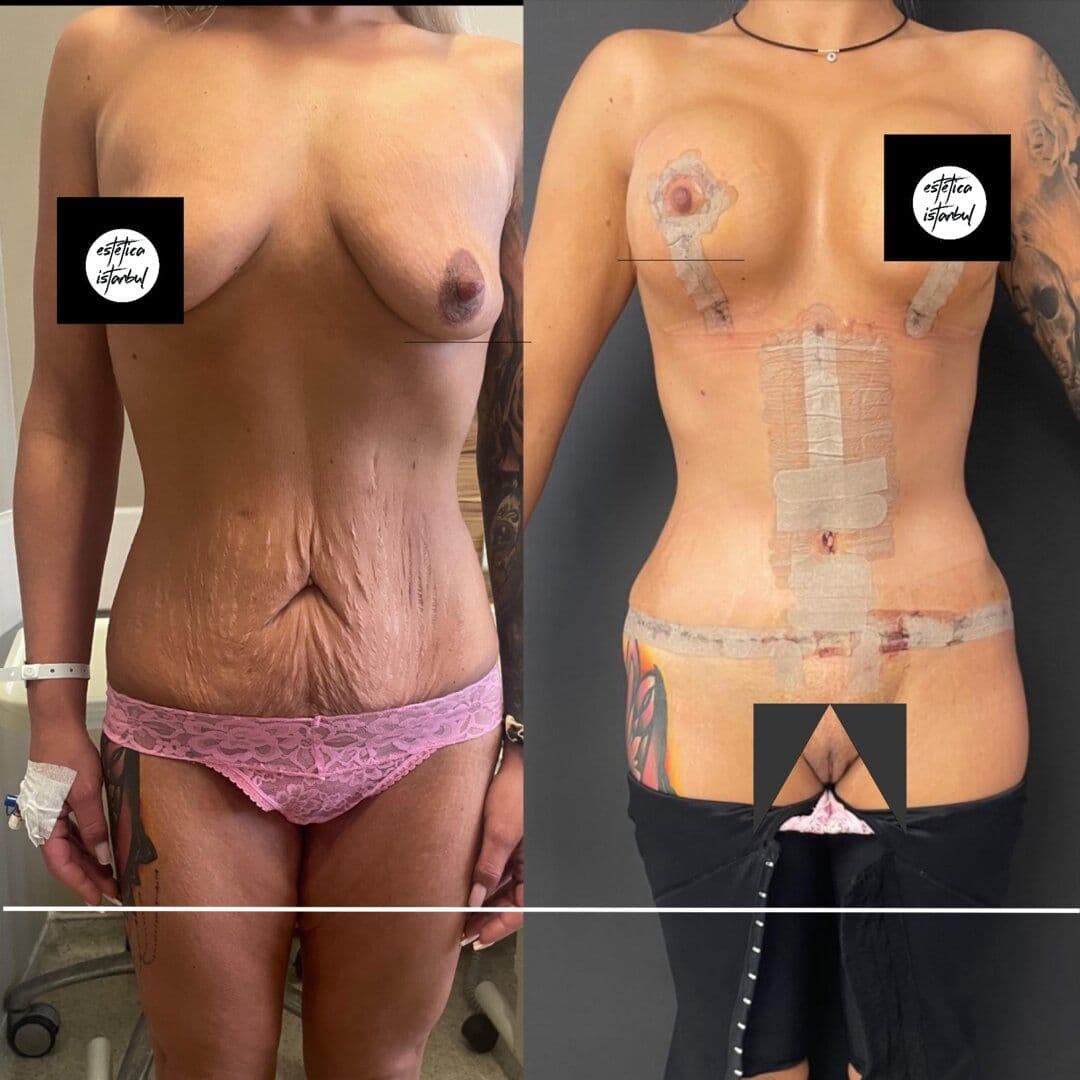
Plastic Surgery Tips to Have a Slimmer Body
Each of us is uniquely beautiful and our body type is a reflection of that. Sometimes, however, we may want to make changes to our bodies to feel better and increase our self-confidence. This is where plastic surgery offers effective options to...
Medical Tourism
Botched Facelift: What You Need to Know
Today, as the interest in aesthetic interventions increases, sometimes undesirable results may occur. Especially in facelift procedures, the practices of inexperienced or unqualified professionals can cause bad results. So, how can...

Medical Tourism
What Is JCI Certification and Why It Matters for Medical Tourism
Discover what JCI certification means, how to verify it, and why choosing an accredited clinic is essential for your medical tourism safety and success.