
Rhinoplasty in Istanbul · All-Inclusive
The profile you've always wanted.
A natural-looking rhinoplasty that preserves how you breathe — performed by board-certified surgeons at Istanbul's JCI-accredited hospital. All-inclusive from €3,000. Over 1,500 rhinoplasties since 2017.
JCI-accredited hospitalBoard-certified surgical teamTrustpilot 4.8 · 1,200+ reviews
The All-Inclusive Package
Here's exactly what you get.
Total value
€7,850
Your price
€3,000
All-inclusive
The €500 deposit locks your price and your surgery date. Balance is paid in Istanbul. No hidden fees. No currency surprises.
Real Results
Before & After
Your Week in Istanbul
Six days. Handled, end to end.
Day 1
You land. We take over.
VIP pickup at Istanbul airport. Check into your hotel. In-person consultation with your surgeon — 3D simulation, markings, breathing assessment, Q&A.
Day 2
Surgery day.
Pre-op bloodwork at the JCI hospital. 2–3 hour procedure under full anaesthesia. Night in hospital with 1:1 nursing.
Day 3
Light recovery.
Transfer to the hotel. First post-op check. Cold compresses, nasal saline routine, short walks. Your coordinator is one WhatsApp away.
Days 4–5
You rest. We check in.
Second post-op check. Swelling management. Bruising softens visibly. Optional short Istanbul drive once you feel up to it.
Day 6
Splint off. Fly home.
Splint removal. Before-and-after photos with your surgeon. Recovery plan in your language. VIP transfer to airport. Follow-ups continue for 12 months.
Global Price Comparison
Save up to 75% in Istanbul
Typical all-inclusive prices by country. Sources: ASPS, RealSelf, major UK/US clinic rate sheets, 2025.
🇹🇷
Turkey (Istanbul)
from €2,650
save 75%
🇬🇧
United Kingdom
from €9,500
🇺🇸
United States
from €10,500
🇮🇹
Italy
from €7,500
🇩🇪
Germany
from €8,000
Patient Stories
What Our Patients Say
Risk Reversal
The Estetica Promise
You are about to trust us with your face, your breathing, your time, and your money. Here is what we promise in return — in writing, before you board the plane.
12-month revision clause
If within 12 months the result doesn't meet the plan you and your surgeon agreed on, we revise — at no surgical or hospital charge.
100% deposit refund window
Change your mind before your flight is booked? We refund your €500 deposit in full. No questions, no asterisks.
Fixed, all-inclusive pricing
The number you are quoted is the number you pay. No "anaesthesia surcharge", no "surgeon tip", no day-of-surgery surprises. Written, signed, and in your language.
— Signed on behalf of the Estetica Istanbul surgical team.
Frequently Asked Questions
How much does rhinoplasty cost in Istanbul?
Rhinoplasty at Estetica Istanbul starts from EUR 2,900 all-inclusive. This covers the surgery, general anaesthesia, hospital stay, 5-star hotel, VIP airport transfers, and 12-month follow-up. The same procedure costs EUR 6,000 to 12,000 in the UK or Western Europe.
How long is recovery after rhinoplasty?
The splint comes off at day 7. Most swelling resolves within 2 to 3 weeks. You can return to work at 10 to 14 days. Exercise is restricted for 6 weeks. Your nose continues to refine for up to 12 months as residual swelling subsides.
Will I have visible scars after rhinoplasty?
For open rhinoplasty, a tiny incision is made on the columella (the strip between your nostrils). It fades to a barely visible line within 3 months. Closed rhinoplasty leaves no external scars at all — all incisions are inside the nose.
How long do I need to stay in Istanbul after rhinoplasty?
We recommend 7 nights. The splint is removed on day 7, and you fly home the same day or the next. This allows our surgeon to monitor your early healing and make any necessary adjustments.
Can rhinoplasty fix breathing problems?
Yes. Our surgeons routinely correct a deviated septum and turbinate issues during rhinoplasty. Functional and cosmetic concerns are addressed in the same procedure at no additional cost.
What if I do not like the result?
Revision rates with experienced surgeons are under 5 percent. We use 3D imaging during consultation so you can see a simulation before committing. If a revision is needed, we offer it at a reduced fee within the first 18 months.
Valid until 2026-08-30
Summer 2026 all-inclusive pricing is locked through August — after that, our 2027 rates apply. Secure your price with a €500 deposit. Refundable until your flight is booked.
Get Your Free Consultation
Our medical team will review your case and send you a personalized treatment plan within 24 hours.
Learn more
Everything you need to know
Rhinoplasty reshapes the structure of the nose to improve its appearance, correct breathing, or revise a previous surgery. The nose sits at the centre of the face — even small changes shift the balance of your features. That's why it's one of the most technically demanding procedures in cosmetic surgery, and one of the most rewarding when it's done well.
Istanbul performs more rhinoplasties than any other city in the world — over 50,000 per year. That concentration of volume builds experience, and it's experience that separates a nose that looks natural from one that looks "done". The surgeons on our team operate on noses every week.
Who rhinoplasty is for
Rhinoplasty suits adults in good general health who have completed nasal development (17 for women, 18 for men) and who are realistic about what surgery can and cannot change. It's not about copying a model or a celebrity — it's about refining your nose so it works in harmony with the rest of your face.
Most patients who come to us have one or more of these concerns: a prominent dorsal hump visible in profile, a bulbous, drooping, over-projected or asymmetrical tip, a nose that's too wide, too narrow, or out of proportion with chin and forehead, breathing problems caused by a deviated septum or valve collapse, or an unsatisfactory result from previous surgery that needs to be corrected.
If you're still growing, if you smoke heavily, or if you're expecting an outcome that your anatomy can't support, we'll tell you in consultation — we don't operate.
Open or closed rhinoplasty
There are two surgical approaches. The surgeon chooses based on what your nose actually needs, not as a marketing position.
Closed rhinoplasty
All incisions are made inside the nostrils, so there are no visible external scars. It's faster, produces less post-operative swelling, and heals more quickly. It works well for moderate changes: dorsal reductions, small tip refinements, straightening of the bridge.
Open rhinoplasty
A small external incision is added on the columella (the strip of tissue between the nostrils). This gives the surgeon direct visibility of the cartilage underneath — essential for complex tip work, major reshaping, cartilage grafts, and most revisions. The scar fades to a fine, barely-visible line within a few months.
Types of rhinoplasty we perform
Primary rhinoplasty
Cosmetic surgery on a nose that has never been operated on. The most common interventions include hump reduction, tip reshaping and repositioning, bridge narrowing, and nostril correction. Because the anatomy is intact, results are predictable and recovery is linear.
Ethnic rhinoplasty
Cosmetic nasal surgery for patients of African, Middle Eastern, South Asian, East Asian, Mediterranean and Latin heritage. The guiding principle is refinement, not transformation. We reshape the nose while preserving the features that define your identity — erasing them would produce a result that doesn't look like you.
Each heritage has a different anatomical starting point. Mediterranean noses — often marked by a strong dorsum and a well-defined tip — respond well to ultrasonic technique combined with a conservative approach to the tip. African noses frequently have strong tips and wider bases. Middle Eastern noses often present a prominent dorsum. South Asian noses tend to have a lower bridge that benefits from augmentation rather than reduction. East Asian noses often need projection at tip and bridge. Thicker skin, common in many ethnic noses, means final definition can take up to twelve months to settle — longer than the standard six.
Revision (secondary) rhinoplasty
Corrective surgery after a previous rhinoplasty that produced an unsatisfactory result — aesthetic, functional, or both. Revision is technically more complex than primary surgery because the anatomy is already altered and scar tissue is present. It often requires cartilage grafts harvested from ear or rib to rebuild support.
Revision is one of the most-requested procedures among our international patients — especially from the UK and Ireland, where post-NHS-cosmetic or post-private-clinic revisions are on the rise. We're conservative about what we promise. If we don't believe significant improvement is realistic, we'll tell you at first contact, before you book.
Septoplasty
Functional surgery to correct a deviated septum — the wall of cartilage that divides the two nasal airways. A deviation obstructs breathing, disturbs sleep, and can cause chronic congestion. Septoplasty is purely functional: it doesn't change the external appearance of the nose.
Septorhinoplasty
A combined aesthetic and functional procedure in a single operation. Many patients have both a deviated septum and aesthetic concerns. Doing them together is safer, costs less, and avoids a second recovery period.
The surgery, step by step
The day begins with a final consultation and review of pre-operative imaging. The procedure is performed under general anaesthesia, with a dedicated anaesthesiologist present throughout. Depending on approach and complexity, surgery takes two to three hours.
The surgeon reshapes bone and cartilage according to the agreed plan, using ultrasonic instruments for bone work where precision matters most. If cartilage grafts are needed, they're harvested and positioned to support the new structure. Surgery closes with internal absorbable sutures and a light external splint that protects the new structure during the first week of healing.
You wake in the recovery room and are transferred to your private room. Most patients spend one night in hospital, then move to the hotel for the remainder of the recovery, where our medical team continues to follow you throughout your stay.
Recovery timeline
Swelling and bruising peak around day three or four, then improve progressively. Pain is generally moderate and controlled with prescribed medication. We follow you in person during the first days and remotely after you return home.
Days 1–7
Expect swelling around the eyes and nose, with congestion from internal swelling. Sleep with your head elevated. The external splint stays on for the full week. On day seven we remove it, and most visible bruising has already faded.
Weeks 2–4
Swelling improves visibly each day. Most patients are comfortable in social settings from the second week. Desk work is manageable. Light physical activity — walking, gentle cardio — resumes around the third week.
Months 2–6
Swelling continues to subside. The shape you see at the third month is close to the final result for most patients. Contact sports or impact-risk activities stay off the list for at least three months.
Months 6–12
Final result. The nose has fully stabilised. Cases with thicker skin and revisions may need the full twelve months to settle completely.
Advanced techniques we use
Ultrasonic (piezoelectric) instrumentation
Ultrasonic bone cutting allows the surgeon to reshape nasal bones with millimetre precision and without the collateral damage of traditional chisels. The result: less bruising, less swelling, finer control over the final bridge shape.
Cartilage grafting
Complex cases — especially revisions and ethnic rhinoplasties requiring augmentation — need grafts. We harvest from the ear for small quantities, from the septum when usable, from rib for major reconstruction. Working with grafts is where a surgeon's experience shows most visibly.
3D imaging and digital planning
Before surgery we use digital imaging to show you a realistic approximation of the likely result. It's a planning tool, not a guarantee — living tissue doesn't behave exactly like a model — but it aligns surgeon and patient on what "better" means before we operate.
Risks and realistic expectations
All nasal surgery carries standard risks: bleeding, infection, reaction to anaesthesia, temporary numbness, asymmetries that may require small revisions. Revision rhinoplasty includes all of these plus the additional challenges of operating on already-altered tissue.
Ethnic rhinoplasty deserves a specific note on expectations. Because we're refining rather than transforming, the change is refinement more than radical modification. A patient arriving expecting a completely different nose from a different ethnic model is not a good candidate.
Dr. Mustafa Ekrem Güleş personally reviews every rhinoplasty consultation before surgery — primary, ethnic, revision and functional. No patient is operated on without his approval.
Why Istanbul over other low-cost destinations
Price is the first reason most international patients consider Turkey. It shouldn't be the only one — especially now that clinics in Albania, Moldova, Ukraine and some Eastern European countries advertise rhinoplasty at €1,200-1,500 on Instagram and TikTok. Ask what disappears at that price.
What matters more is the concentration of experience. Our surgeons see more rhinoplasties in a month than a Western surgeon sees in a year. That volume builds judgement — the ability to look at a nose and know immediately what will work and what won't.
You have access to surgeons who specialise in revision, an area where many Western and Eastern European clinics have limited experience. And you have a clinical standard — JCI-accredited hospitals, board-certified surgeons, international-grade anaesthesia — equivalent to the best private clinics in London, Dublin, New York or Sydney, without the London, Dublin, New York or Sydney price.
What's included
Online consultation with on-photo assessment. Rhinoplasty under general anaesthesia in a JCI-accredited hospital. One night hospital stay in private room. Pre-operative bloods, ECG, cardiology clearance. Post-operative medications and splint removal. Four nights in a partner hotel with airport transfers. English-speaking patient coordinator throughout. Follow-up at 1, 3, 6 and 12 months via WhatsApp.
What you pay for with us vs a low-cost clinic
The difference between us and the €1,200 clinic comes down to five concrete things: JCI accreditation of the hospital (not every Istanbul clinic has it), a dedicated anaesthesiologist throughout surgery, one hospital night included in the package, post-operative follow-up under Dr. Güleş's oversight, and an English-speaking team seven days a week. None of these are negotiable when it's your face.
At the other end of the scale — compared to a Harley Street rhinoplasty at £7-12K, or a Manhattan rhinoplasty at $15-25K, or a Sydney rhinoplasty at AU$20-30K — you're not giving up standards. You're paying the difference between Turkish operating costs and Western ones, on the same grade of hospital, for surgeons with higher annual volume.
English-speaking team — from first message to one-year follow-up
Our team replies in English on WhatsApp, phone and email. You won't translate symptoms, concerns or post-operative questions. The coordinator who handles your first enquiry is the same person you speak to at your one-year follow-up.
Request your free quote — our team replies in UK/IE business hours and in a second window that covers US Eastern time through Australian morning. Photo-based pre-assessment on the same day.
Related Procedures

Deep Dive
All articles →Further Reading
Medical Tourism
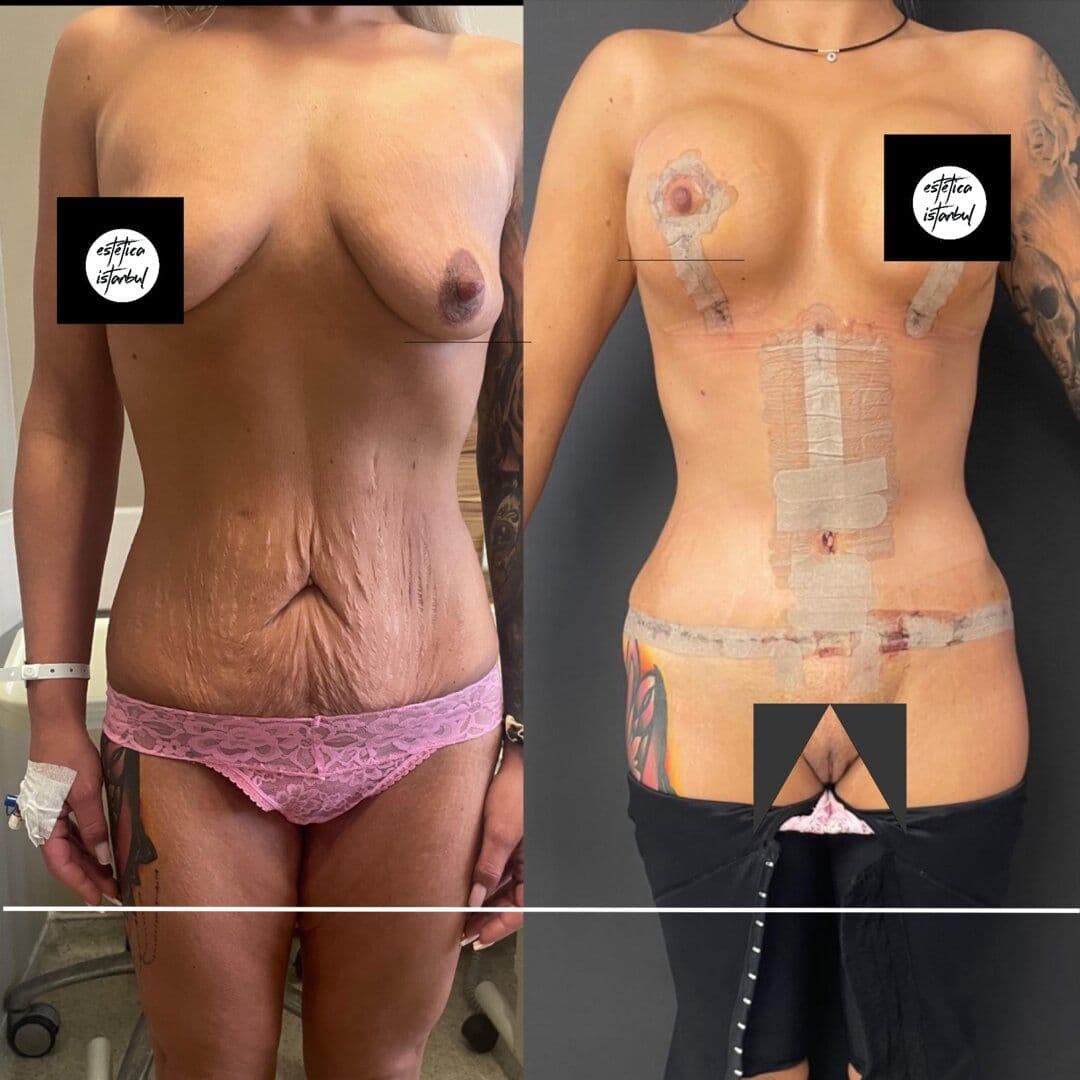
Plastic Surgery Tips to Have a Slimmer Body
Each of us is uniquely beautiful and our body type is a reflection of that. Sometimes, however, we may want to make changes to our bodies to feel better and increase our self-confidence. This is where plastic surgery offers effective options to...
Medical Tourism
Botched Facelift: What You Need to Know
Today, as the interest in aesthetic interventions increases, sometimes undesirable results may occur. Especially in facelift procedures, the practices of inexperienced or unqualified professionals can cause bad results. So, how can...
Medical Tourism
What Is JCI Certification and Why It Matters for Medical Tourism
Discover what JCI certification means, how to verify it, and why choosing an accredited clinic is essential for your medical tourism safety and success.