FACE
Lip Lift
Lip lift in Istanbul — bullhorn technique to shorten the distance between nose and upper lip and reveal more of the vermillion. The permanent alternative to lip fillers. Scar hidden under the nose. Medical oversight Dr. Güleş, JCI-accredited hospitals. All-inclusive package from €1,450.
Trusted by 10,000+ international patients
JCIAccredited Hospitals
T.C.Ministry of Health Licensed
ISAPSBoard-Certified Surgeons
4.9 ★Trustpilot · 1,200+ reviews
15+ yrsYears of Experience
8,000+Procedures Performed
Get Your Free Consultation
Our medical team will review your case and send you a personalized treatment plan within 24 hours.
Duration
30–60 minutes
Anesthesia
Local anesthesia
Hospital Stay
Day procedure
Back to Work
3–5 days
Recovery Time
5–7 days
Results Visible
1–3 months
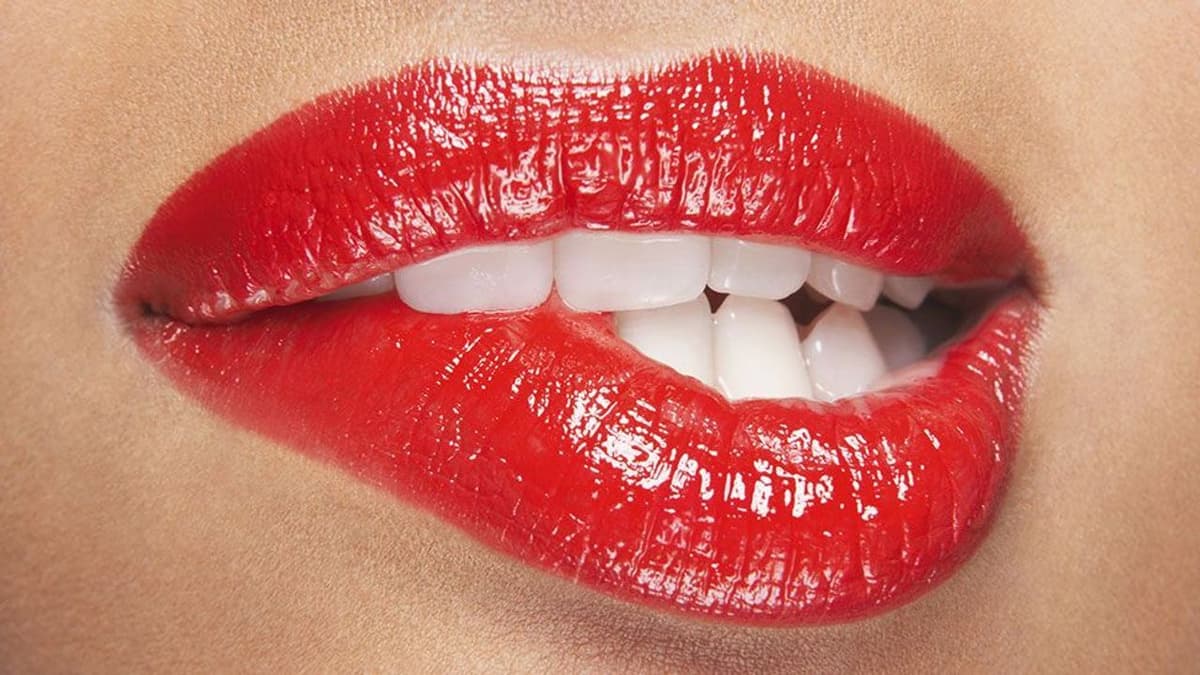
The lip lift — specifically the bullhorn lip lift — is a precise operation that shortens the distance between the base of the nose and the upper lip (the philtrum) and as a consequence reveals more of the upper lip vermillion, creates a slightly more defined Cupid's bow, and lifts the lip commissures subtly. It is the permanent alternative to repeated upper lip filler — and for most patients who have been getting filler for years, the honest answer is that the problem was never volume: the philtrum had lengthened with age (or was long anatomically from the start), and no amount of injected product solves that.
An elongated philtrum is one of the most reliable markers of ageing in the lower face, and it cannot be corrected with any non-surgical technique. Lip lift is the operation designed for it.
Who the lip lift is suitable for
The right candidate presents an elongated upper lip philtrum, with the distance between the base of the nose and the free edge of the upper lip longer than proportionate (typically over 18 mm in an adult female, over 20 mm in an adult male — but always assessed in relation to overall face proportions); a vanishing upper lip edge ("the lip disappears when I smile") despite repeated filler; an "old-looking" lower face disproportionate to the rest of the face; dissatisfaction with filler results — injections have produced a puffy, unnatural lip without resolving the underlying length.
Patients with a naturally short philtrum are not candidates — making it even shorter produces an unnatural "animal-upper-lip" appearance that we specifically avoid. We decline the operation for these patients at consultation, honestly, even when they ask for it.
Lip lift or filler — when each is the right answer
Filler is the right answer when volume is genuinely insufficient on an upper lip of normal length — a younger patient with naturally thin lips, or a patient whose lip has lost volume alone with no philtrum change. It is reversible, non-surgical, and the right entry point.
Lip lift is the right answer when philtrum length is the underlying problem — most patients over thirty-five or forty who feel "my lip has disappeared", and a subset of younger patients who have always had a long philtrum. No amount of filler can shorten the philtrum; filler only piles volume onto an already-long upper lip and produces the "duck lip" effect that patients are increasingly identifying as the wrong outcome.
At consultation we assess this honestly with photographs and measurements. If your case is genuinely a volume-only case, we tell you so and do not sell you surgery. If it is a length case, we explain the procedure in detail. Sometimes both are indicated, and the lip lift is followed by a small amount of filler six months later to refine.
The bullhorn technique
Of the several lip lift techniques available, we use the bullhorn as the standard for most cases. The incision is shaped like the silhouette of a bull's horns, hidden in the natural crease under the nose (where the base of the nose meets the upper lip). Through this incision, a calculated amount of skin is removed — typically 5 to 8 mm in a female patient, occasionally more — and the upper lip is elevated to its new position.
The amount removed is decided based on your individual anatomy. We calculate it in millimetres at the pre-operative consultation, not in the operating room. Under-correction produces no visible result; over-correction produces an unnatural "donkey smile". Millimetric precision is the point.
The surgery, step by step
Performed under local anaesthesia, occasionally with light sedation for anxious patients. Duration forty-five minutes to one hour. Day-surgery procedure — you return to the hotel the same afternoon. In a JCI-accredited hospital, with an anaesthesiologist available on request.
Sutures are fine, non-absorbable, removed at day six to seven.
Recovery
Week 1
Moderate swelling in the upper lip, concentrated in the first three days. Mild bruising possible under the nose. Sutures removed on day six or seven. Liquid and soft diet for the first 48–72 hours. No smiling or laughing wide, no chewing tough food — we insist on this.
Weeks 2–6
Scar care — silicone sheet or gel as directed — begins after suture removal. The scar at this stage is pink and visible at close range but already hides well in the natural shadow under the nose. Progressive return to normal facial expressions. Most patients return to social and professional life from day ten.
Months 3–12
Scar maturation over six to twelve months. At twelve months the scar is typically a fine white line hidden in the sub-nasal fold, invisible at conversation distance. The upper lip settles into its final position over three to six months — expect initial over-elevation to relax slightly.
Risks and realistic expectations
Honest risks: scar visibility — the scar runs under the nose and is the subject of the most legitimate concern for this operation. In experienced hands on appropriate candidates, the scar matures to practically invisible. In inappropriate candidates (keloid-prone skin, poor wound healing) it can remain visible. We screen for this at consultation. Asymmetries that may require a small revision. Over-correction producing an unnatural elevation — the reason the technique must be millimetrically precise. Temporary altered sensation in the upper lip, typically resolving over three to six months.
We do not perform lip lift on keloid-prone patients. The risk of visible sub-nasal scarring is not acceptable and we decline the operation honestly at consultation.
Why Istanbul versus other destinations
Lip lift is a millimetric operation where the difference between a natural result and an over-elevated one — or between an invisible scar and a visible one — is measured in how carefully the incision is placed and closed. Our surgeons perform it regularly, in JCI-accredited hospitals, with photographic pre-operative planning and post-operative follow-up.
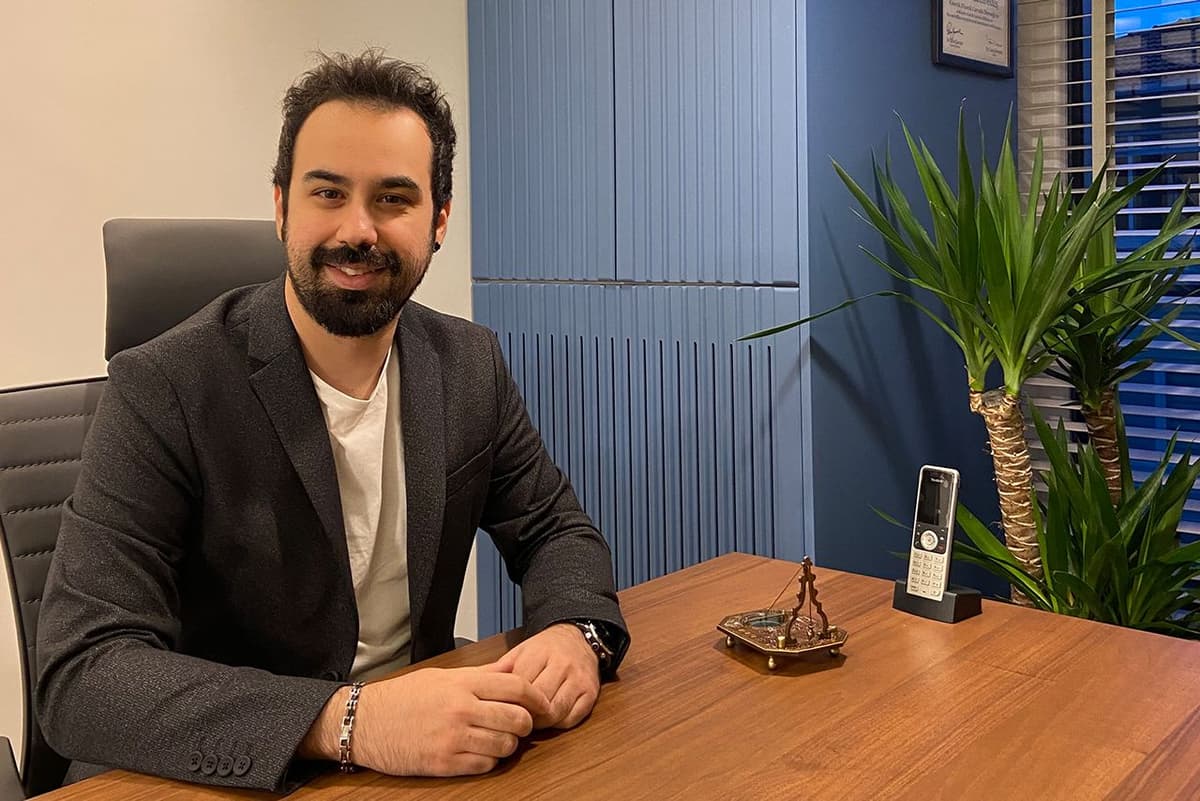
**Dr. Mustafa Ekrem Güleş** approves every patient clinically before surgery.
Why not the €500 lip lift
On lip lift, the rock-bottom price is paid in visible scars and over-elevated "donkey smile" results. A clinic quoting lip lift at €500 often skips the millimetric pre-operative planning (removes a standard 7–8 mm on every patient, regardless of anatomy), uses sutures that are not fine enough for facial-grade closure, and has no post-operative scar-care protocol.
What you pay for with us is verifiable: pre-operative photographic measurement and individualised excision amount, fine facial-grade closure, silicone-based scar-care regimen included, JCI-accredited hospital, follow-up at 1, 3, 6 and 12 months via WhatsApp in English.
Combining with rhinoplasty, filler, or other refinements
Lip lift is often performed in the same session as rhinoplasty (same operating day, same anaesthesia) when both are indicated — the two operations work on adjacent zones and complement each other aesthetically. It can also be combined with a facelift or eyelid surgery in the same trip. Conversely, we do not perform lip lift in the same session as aggressive lip filler — filler can distort the post-operative lip position. If you plan both, lip lift first, filler six months later.
English-speaking team — from first message to twelve-month follow-up
Our team replies in English on WhatsApp, phone and email. From the first photo-based assessment to the twelve-month scar check, your contact is consistent and English-speaking. Questions about scar care, return to professional settings on camera, when to resume lip products — come up often and deserve immediate English-language answers.
Request your free quote — our team replies in UK/IE business hours and in a second window covering US Eastern through Australian morning. Photo-based pre-assessment on the same day.

What's Included
VIP airport transfer (pickup & drop-off)
Accommodation in 4-star partner hotel
Professional translator with 24/7 support
All hospital and surgery fees
Pre-operative blood tests & medical consultation
Anesthesia (general or local as required)
Post-operative medications & aftercare kit
1-year follow-up consultations
Dedicated WhatsApp patient coordinator (24/7)
Not Included
International flights to and from Istanbul
Additional hotel nights beyond the package
Personal expenses (minibar, spa, shopping)
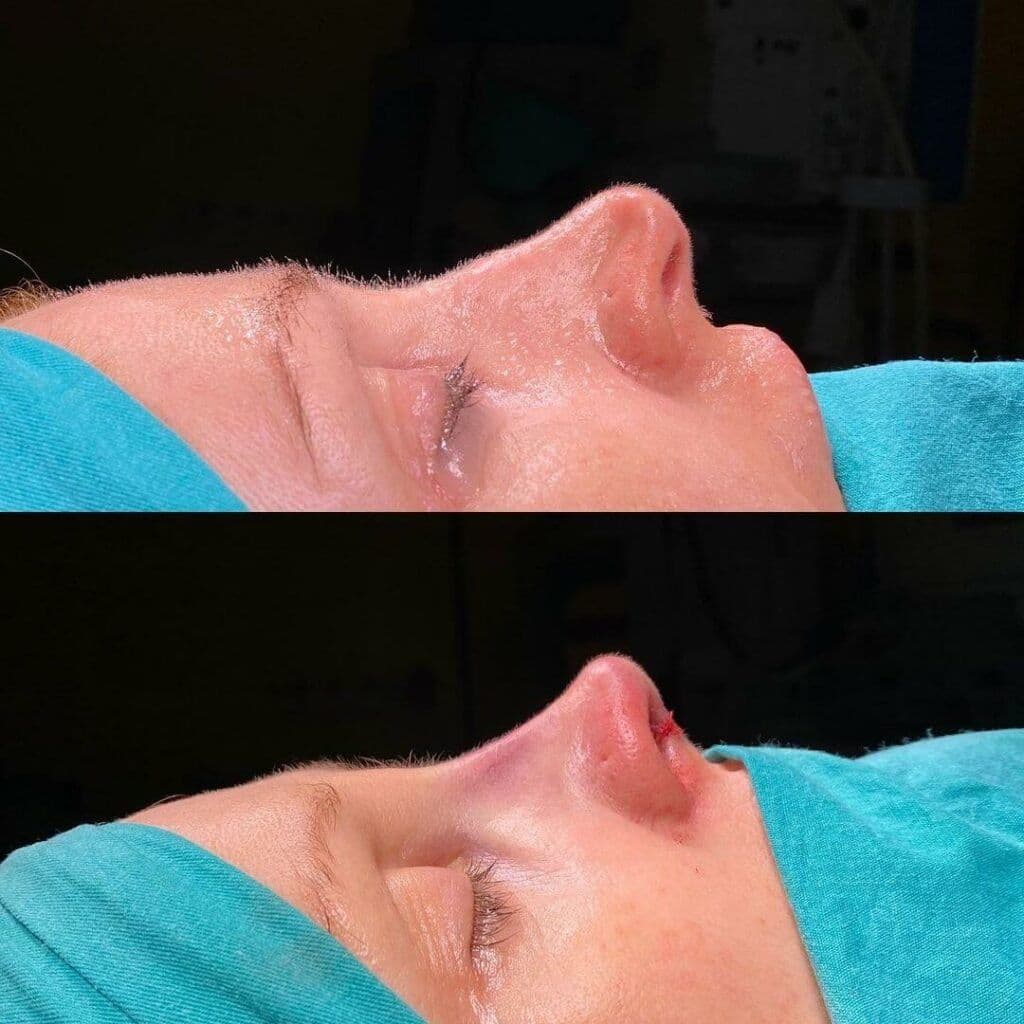
Real Results
Before & After
Frequently Asked Questions
What is the cost of lip lift surgery in Istanbul?
Lip lift procedures start from €2,850. Combining with lip filler, rhinoplasty, or facelift qualifies for bundle pricing. Payment plans are available for international patients.
How long is the recovery from a lip lift?
Initial healing takes 7–10 days. Swelling peaks at 2–3 days and gradually subsides over 2 weeks. You may return to normal diet after 5 days.
Will a lip lift be painful?
Pain is minimal due to local anesthesia. Most patients feel mild discomfort or tightness for 3–5 days, easily managed with prescribed pain relief.
How long do lip lift results last?
Results are permanent, with improved lip projection and definition sustained indefinitely. Aging still affects lips naturally, but surgical reshaping remains stable.
What are the risks associated with lip lift?
Infection, asymmetry, and scar visibility are uncommon. Our technique places scars in natural creases to minimize visibility. Revision rates are under 3%.
Can lip lift be done with other facial procedures?
Absolutely. Lip lift combines well with rhinoplasty, cheek augmentation, facelift, or chin implant for comprehensive facial harmony.
How long should I stay in Istanbul for lip lift?
Plan 5–7 days: 1 pre-op consultation, 1 surgery day, 2–3 initial recovery days, and 1–2 follow-up visits. You can fly home within the week comfortably.
Deep Dive
All articles →Further Reading
Rhinoplasty
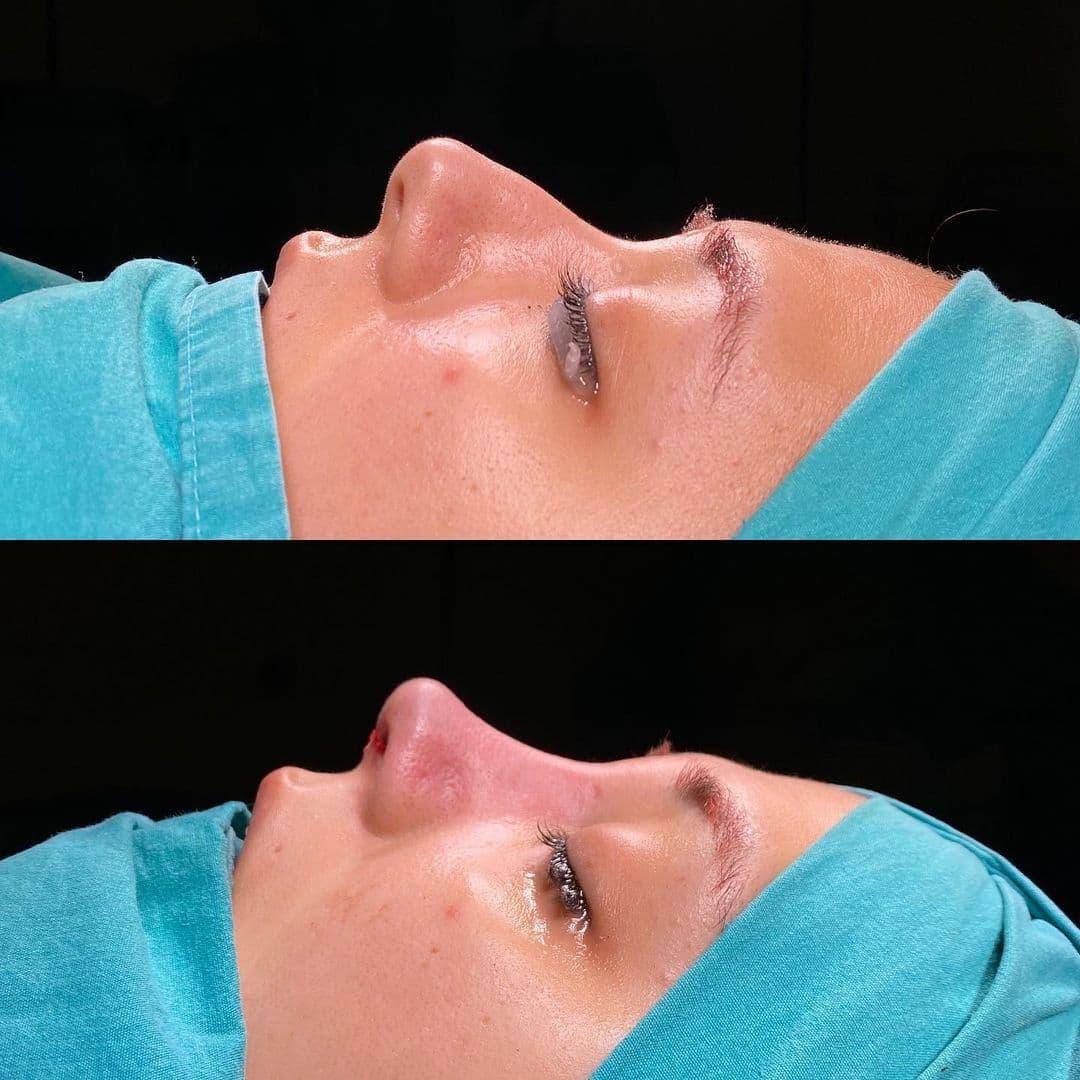
Rhinoplasty in Istanbul: Complete Cost, Recovery & Results Guide
Complete guide to rhinoplasty in Istanbul including why the city is the rhinoplasty capital, surgeon expertise, costs 60-70% lower than Europe, recovery timeline, and natural results.
Rhinoplasty
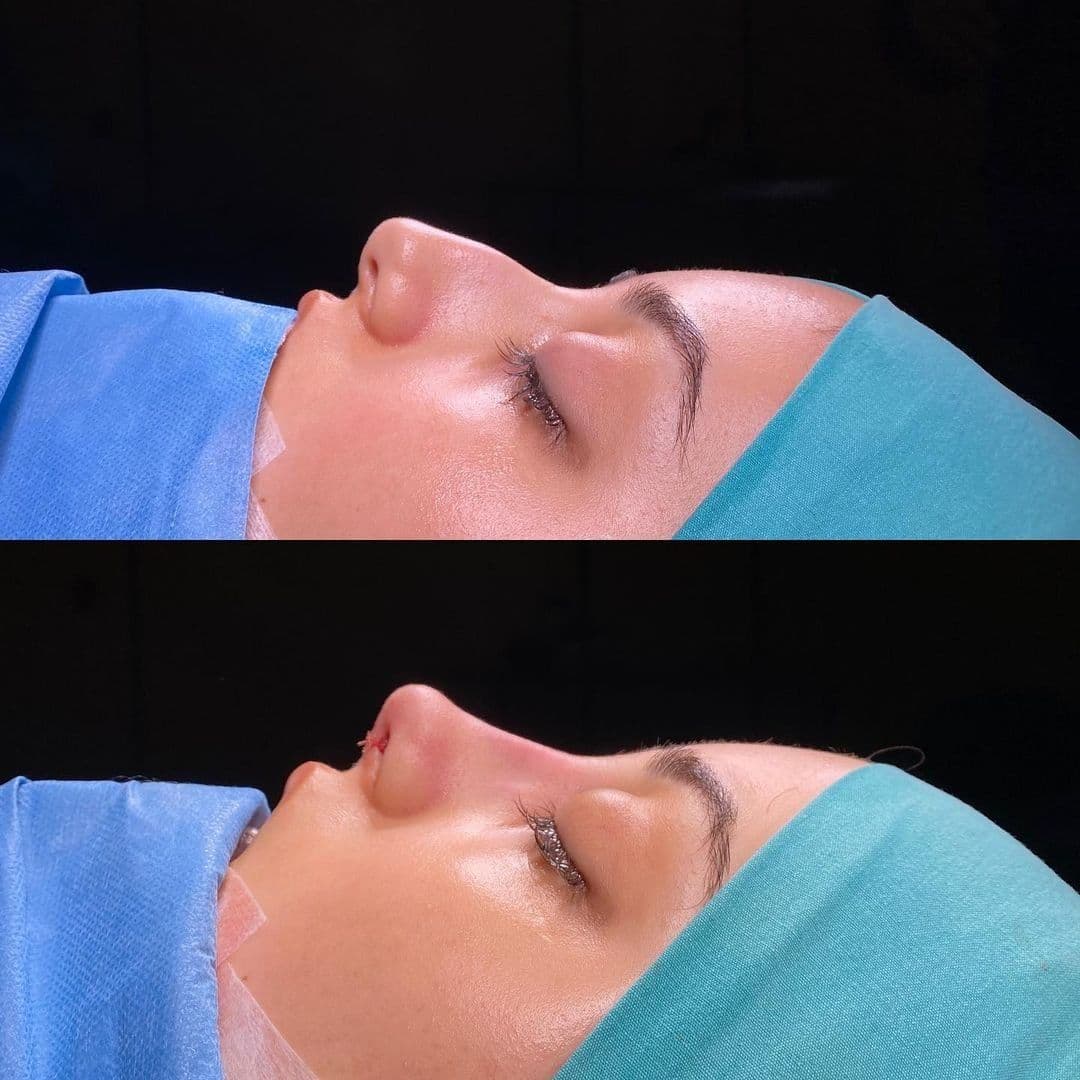
Open vs Closed Rhinoplasty: What's the Difference and Which Is Better?
Understand the key differences between open and closed rhinoplasty techniques, including scarring, recovery time, precision, and which is better for your specific needs.
Rhinoplasty
Rhinoplasty in Turkey: Is It Worth It? A Complete 2026 Guide
An honest answer to the question everyone Googles — is a rhinoplasty in Turkey actually worth it? Cost comparison, quality, risks, and the real checklist for deciding.