HAIR TRANSPLANT
Eyebrow Transplant
Eyebrow transplant in Istanbul — DHI (Direct Hair Implantation) to restore or reshape thin, over-plucked or scar-affected eyebrows. Millimetric angle and density. Permanent result — no more microblading touch-ups. Medical oversight Dr. Güleş. All-inclusive package from €1,850.
from €1,500 All-inclusive
Trusted by 10,000+ international patients
JCIAccredited Hospitals
T.C.Ministry of Health Licensed
ISAPSBoard-Certified Surgeons
4.9 ★Trustpilot · 1,200+ reviews
15+ yrsYears of Experience
8,000+Procedures Performed
Get Your Free Consultation
Our medical team will review your case and send you a personalized treatment plan within 24 hours.
Global Price Comparison
Save up to 87% in Istanbul
Typical all-inclusive prices by country. Sources: ASPS, RealSelf, major UK/US clinic rate sheets, 2025.
🇹🇷
Turkey (Istanbul)
from €1,500
save 87%
🇬🇧
United Kingdom
from €7,500
🇺🇸
United States
from €11,500
🇮🇹
Italy
from €5,500
🇩🇪
Germany
from €5,500
Duration
2–3 hours
Anesthesia
Local anesthesia
Hospital Stay
Day procedure
Back to Work
2–3 days
Recovery Time
5–7 days
Results Visible
6–9 months
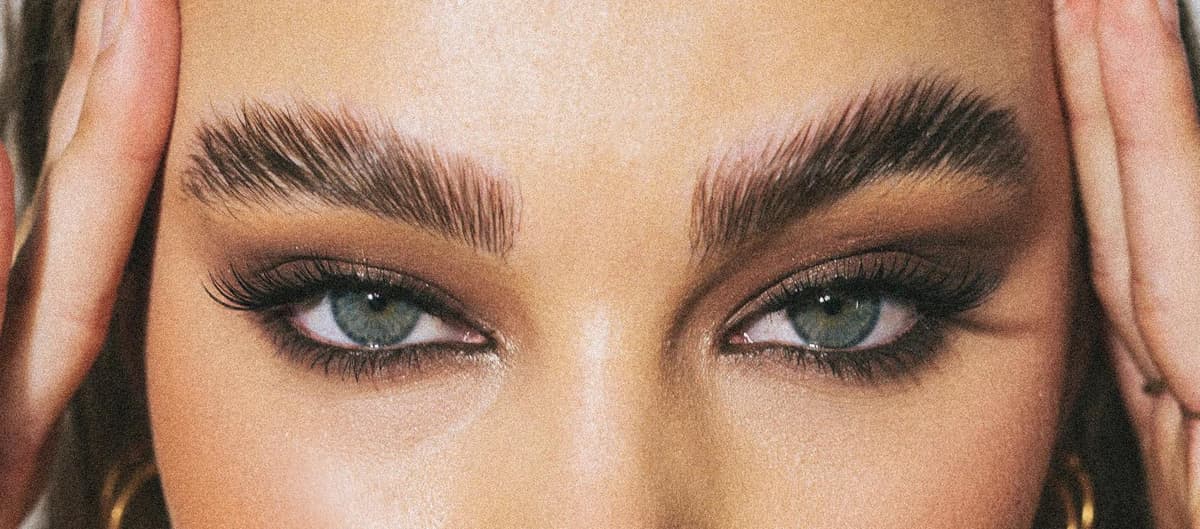
Eyebrow transplant rebuilds thin, sparse, over-plucked or scar-damaged eyebrows using the DHI (Direct Hair Implantation) technique. Grafts are taken from the scalp donor zone and placed individually into the brow in the exact angle, direction and density required for a natural result. The procedure is permanent — unlike microblading, which requires a touch-up every twelve to eighteen months and fades progressively over years.
For most of the anglosphere patients who book with us, the path to this decision has been a calculation. Years of microblading at £400–600 per session, every 12–18 months, produces a total spend over a decade that exceeds the one-time cost of a surgical transplant. The microblading result fades; the surgical result is permanent; and the appearance of real hair — growing at real angles out of real follicles — is different at close range from any form of pigment tattoo, however skilled.
Who eyebrow transplant is suitable for
The right candidate is typically female (70–80% of our eyebrow patients) or male (a growing cohort), typically 30–55, with over-plucked brows from the 1990s/2000s that have not recovered; genetically sparse or thin brows; scar-affected zones from injury, piercing, or previous cosmetic procedures; alopecia areata affecting the brow zone (typically at least 12 months of stable remission); frustration with microblading fade-and-repeat cycles; or a desire for permanent, styleable brows that can be trimmed, brushed and shaped like native hair.
Patients with active alopecia areata not in stable remission, active inflammatory skin disease in the brow area, or trichotillomania currently affecting the brows (the tendency to pull hair, which would affect the transplanted hairs as well) should postpone or reconsider. We screen for these at consultation.
DHI — why the technique matters for the eyebrow
The eyebrow is the most millimetric zone in all of hair restoration. Every hair in the native brow grows at a specific angle, a specific direction, and a specific depth. The medial head of the brow — the inner part, nearest the nose — grows almost vertically upward. The body of the brow grows outward and slightly upward. The tail — the outer portion — grows outward and slightly downward. A transplant that does not respect these angles produces a "startled" or "grass-like" appearance that is immediately identifiable as transplanted.
DHI uses the Choi implanter pen, which allows the surgeon to control both the angle of entry and the depth. This is the technique of choice for the eyebrow. A clinic offering FUE-with-pre-channels for the brow is typically doing so because DHI is more technically demanding and slower — and the difference shows at close range six months later.
The session, step by step
Local anaesthesia only. Duration is four to six hours depending on the number of grafts — typical eyebrow transplant uses 150–400 grafts per brow (60–120 per eye for a touch-up, more for a full reconstruction). Performed in a single session in a hair-transplant-specialised clinic with medical oversight.
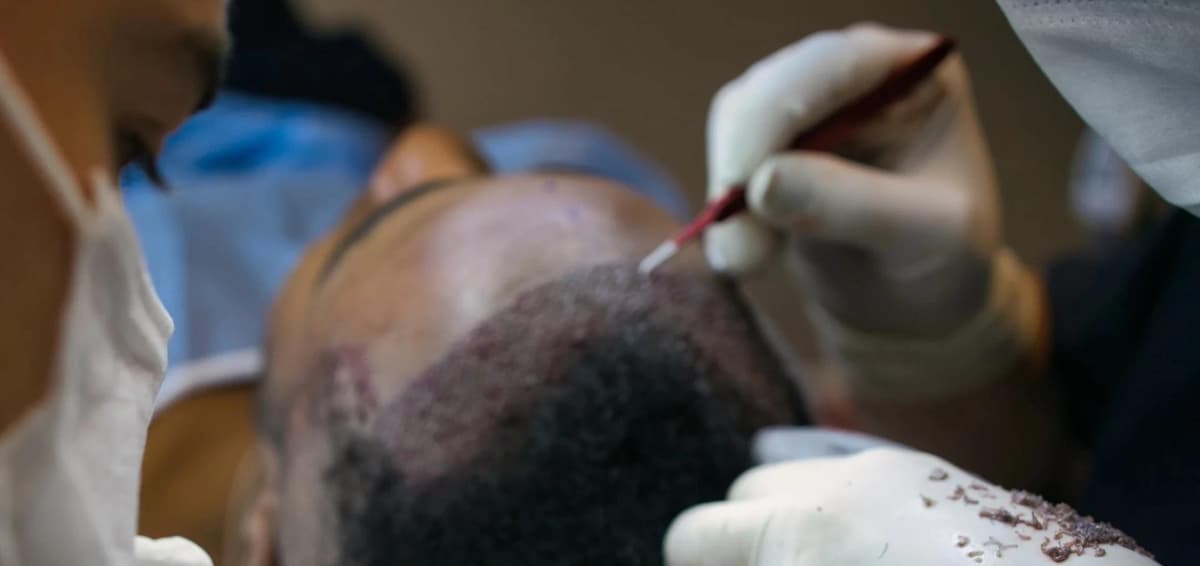
Stage one: the donor zone on the scalp is trimmed (a small area, typically invisible under overlying hair) and anaesthetised, and grafts are extracted individually using a 0.6–0.7 mm micro-punch. Stage two: grafts are sorted — single-hair grafts are prioritised for the brow zone because the native brow hair is predominantly single-hair follicles. Stage three: implantation with Choi pens into the pre-planned brow design, at the correct angle, direction and density for each sub-zone.
Eyebrow design — the pre-operative planning
The design of the new brow is done collaboratively with the patient before surgery. We photograph the face, analyse the existing brow position (when some brow remains) and facial proportions, discuss the aesthetic goal (natural restoration vs. a specific shape), and mark the final design with a cosmetic pencil for approval. The patient sees the shape on their own face and approves it before implantation begins.
This step is the difference between a good and a poor result. A standardised "house shape" applied to every patient produces uniform results that do not match individual face proportions. We design every brow individually.
Recovery
Week 1
Small crusts form on each implantation site and fall away over the first seven to ten days. Mild redness and minor swelling in the brow area. The donor zone on the scalp is covered by surrounding hair and heals invisibly within three to five days. Most patients return to normal work from day three to five, with the note that the brow area will be visibly peppered with tiny scabs in the first week.
Weeks 2–8
The transplanted hairs shed at approximately week three to four — the "shock loss" phase. This is expected and does not indicate failure. The brow will appear thinner during this phase than on day one.
Months 3–6
New growth begins to emerge from the transplanted follicles. Brow fills progressively. By month six, most patients see approximately 70% of the final result.
Months 9–12
Final density and growth characteristics stabilise by month nine to twelve. The brow can be trimmed, brushed and styled normally.
The quirks of transplanted brow hair
The transplanted hairs keep the growth characteristics of their donor location — which means they continue to grow at the rate of scalp hair, not brow hair. In practice, this means the brow hairs will need to be trimmed approximately every four to eight weeks to maintain a natural length. Most patients do this themselves with small scissors in thirty seconds; it is the one ongoing maintenance requirement of the procedure and we explain it honestly up front.
Risks and realistic expectations
Honest risks: folliculitis (small infections, treated with local care); imperfect angle on a small proportion of grafts requiring excision or acceptance; asymmetry between the two brows (minimised by careful design but some small degree possible); shock loss of adjacent native brow hairs (usually recovers within months); slight coarser texture of the scalp-donor hair versus native brow hair (usually not apparent but is a technical reality).
The result is permanent for the transplanted hairs. What this operation cannot do: it cannot produce a brow from zero if the patient wants a shape not supported by donor availability; it cannot eliminate the need for trimming every few weeks; it cannot change coarse/fine hair texture beyond what the donor follicle provides.
Eyebrow transplant vs microblading
Microblading is a cosmetic tattoo applied semi-permanently. It fades over 12–18 months and requires touch-ups. Cost typically £400–600 per session. Result: a pigment mark that reads as a brow at normal viewing distance, less convincing at close range.
Eyebrow transplant is real hair, permanently growing. Cost: a single one-time procedure. Result: real hair with real texture at close range, requiring periodic trimming.
For patients who want the permanent solution and are prepared for trimming maintenance, transplant is the better long-term choice. For patients who want a semi-permanent option with no daily maintenance, microblading remains a reasonable path.
Why Istanbul versus other destinations
Turkey's hair-transplant volume produces the millimetric angle expertise that eyebrow transplant specifically demands. Our partner clinic performs eyebrow transplants regularly, with specialists experienced in the distinct angle requirements of each sub-zone. The price gap versus UK/US/Australia is substantial.
**Dr. Mustafa Ekrem Güleş** provides medical oversight.
Why not the €600 eyebrow transplant
On eyebrow transplant, the rock-bottom price is paid in wrong-angle implantation (the "startled brow"), standardised house shapes applied to every face, and over-extraction from a donor zone that a careful surgeon would have conserved. A clinic quoting eyebrow at €600 often performs the extraction in a factory workflow without individual design planning.
What you pay for with us is verifiable: individual pre-operative brow design with your face proportions, DHI with Choi pens for angle precision, single-hair graft prioritisation for natural density, JCI-partnered medical oversight, English-speaking follow-up at 3, 6 and 12 months.
English-speaking team — from first message to 12-month result
Our team replies in English on WhatsApp, phone and email. Eyebrow regrowth has anxious months (the post-shock-loss period 2–4 when the brow looks thinner than on day one) — we provide English-language reassurance and monitoring throughout.
Request your free quote — our team replies in UK/IE business hours and in a second window covering US Eastern through Australian morning. Photo-based pre-assessment and design preview on the same day.
Your Surgical Team
Meet Your Surgeons
What's Included
VIP airport transfer (pickup & drop-off)
Accommodation in 4-star partner hotel
Professional translator with 24/7 support
All hospital and surgery fees
Pre-operative blood tests & medical consultation
Anesthesia (general or local as required)
Post-operative medications & aftercare kit
1-year follow-up consultations
Dedicated WhatsApp patient coordinator (24/7)
Not Included
International flights to and from Istanbul
Additional hotel nights beyond the package
Personal expenses (minibar, spa, shopping)
Frequently Asked Questions
How long does an eyebrow transplant last?
Eyebrow transplant results are permanent. The transplanted hairs come from your scalp donor area and will continue to grow for life. Because scalp hair grows longer than natural eyebrow hair, you will need to trim your eyebrows regularly — a small trade-off for permanent fullness.
How many grafts are needed for eyebrow transplant?
Most patients need 200 to 400 grafts per eyebrow. If you are building eyebrows from scratch (due to alopecia or scarring), you may need up to 500 per brow. Our surgeon will assess your needs during your free consultation.
Will the transplanted eyebrow look natural?
Yes, when performed by an experienced surgeon. The key is implanting single follicles at the correct angle, direction, and depth. Our surgeons use custom-curved needles for eyebrow work to mimic the flat growth angle of natural brow hairs.
What is the recovery time for eyebrow transplant?
Crusting falls off within 7 to 10 days. Mild redness fades within 2 weeks. You can return to work and social activities within a week. Most swelling is minimal since the eyebrow area heals quickly.
How much does eyebrow transplant cost in Istanbul?
Eyebrow transplant at Estetica Istanbul starts from EUR 1,500 all-inclusive. The package covers the procedure, hotel, airport transfers, medications, and follow-up care.
Deep Dive
All articles →Further Reading
Hair Transplant
Scarless Hair Transplant Turkey
Hair transplantation is an important milestone in the journey of individuals to cope with hair loss. Today, with the innovations brought by technology, hair transplantation methods are constantly evolving. One of the most remarkable results of this...
Hair Transplant
Using Shampoo After Hair Transplant
You may have many questions about shampooing, showering and care after hair transplantation. In this article, we have explained how you should wash your hair after hair transplantation. We wish you a pleasant reading. ...
Hair Transplant
First Haircut After Hair Transplant: The Ultimate Guide
When your hair grows after hair transplantation, you may wonder questions such as how should the haircut be, when should it be or how should I style my hair? In this blog post, we have answered these questions in detail. We wish you a...